Christmas Plants and Flowers: Premium Illustrations
As a designer who spends most of the year juggling brand identities and seasonal campaigns, my first impression when opening the Christmas Plants and Flowers asset pack was one of immediate relief. Too often, holiday graphics feel either overly cartoonish or so generic they lack soul. This collection, however, strikes a delicate balance between traditional botanical accuracy and modern illustrative flair. The mood it creates is warm, organic, and inviting—perfect for clients looking to elevate their end-of-year marketing without resorting to cliché red-and-green Santa imagery. For a recent project involving a boutique handmade candle brand, I needed visuals that communicated natural ingredients and festive warmth simultaneously. These Illustrations provided exactly that narrative bridge.
Elevating Brand Identity with Botanical Warmth
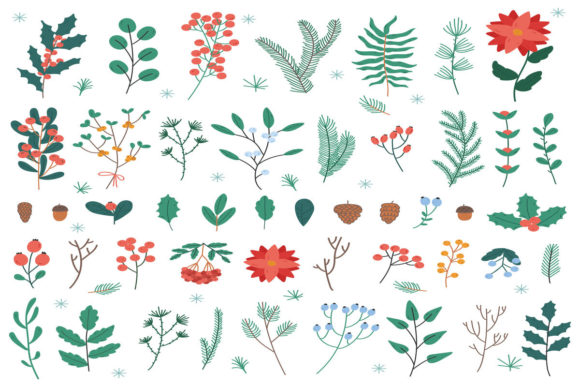
In the context of real-world design, versatility is king. When reviewing Christmas Plants and Flowers for a small business branding package, the potential applications are vast. The assets function exceptionally well in logo design where a subtle holly sprig or a detailed pine cone can serve as a memorable icon without overwhelming the wordmark. For packaging design, these elements add a layer of sophistication. Imagine a kraft paper box for artisanal cookies; placing a high-resolution illustration of mistletoe and berries on the label instantly transforms a simple container into a giftable luxury item.
Beyond physical products, the utility extends deeply into the digital realm. For social media graphics, these assets act as perfect framing devices for Instagram stories or Pinterest pins. They allow content creators to maintain a cohesive aesthetic while signaling the holiday season. If you are building a Canva template for coaches or bloggers, integrating these floral elements provides a "done-for-you" professional look that saves hours of manual drawing. The style leans towards a hand-drawn aesthetic, which resonates strongly with audiences seeking authenticity in an increasingly digital world.
Ideal Applications for Maximum Visual Impact
To get the most out of this graphic design asset, it is crucial to understand where it shines brightest. The intricate details of the leaves and petals demand space to breathe. Therefore, these Illustrations perform best in:
- Hero Graphics: Use large-scale versions on website headers or landing pages to set an immediate seasonal tone.
- Product Mockups: Overlay the assets onto mug, tote bag, or t-shirt mockups to visualize print-on-demand potential before committing to production.
- Decorative Accents: Scatter smaller elements like individual berries or leaves across editorial design layouts to guide the reader's eye without distracting from the copy.
- Themed Collections: Group different plant varieties to create a cohesive series of sticker designs or printable wall art for an Etsy product launch.
- Campaign Visuals: Utilize the full bouquets for email headers or digital ad banners where the goal is emotional connection rather than hard selling.
Navigating Limitations and Design Constraints
While Christmas Plants and Flowers is a robust tool, professional judgment dictates knowing when not to use it. Because botanical illustrations often contain fine lines and textured shading, they can lose definition when scaled down too aggressively. Avoid using the most complex arrangements in small sizes, such as favicons or tiny social media profile icons, where they may appear as muddy blobs. Furthermore, these assets might clash with ultra-minimalist branding strategies that rely on stark geometry and flat colors. If your client's brand identity is strictly corporate and conservative, the organic, somewhat rustic nature of these plants might feel out of place.
Caution is also advised when placing these elements over complex backgrounds or busy photography. The detailed edges of the leaves require sufficient contrast to remain legible. In low-contrast designs, the beauty of the illustration gets lost, undermining the visual hierarchy. Always ensure there is enough negative space around the graphic to let it stand as a focal point rather than visual noise.
Practical Designer Notes for Commercial Success
Before finalizing any client deliverable with Christmas Plants and Flowers, I run through a strict quality control checklist. First, test it in black and white. A true test of an illustration's strength is whether it holds its form without color. This is vital for single-color screen printing or embossing projects. Next, check contrast on light and dark backgrounds. While PNG files usually offer transparency, ensure the edge anti-aliasing doesn't create a halo effect on dark modes.
File format inspection is non-negotiable. If the bundle includes SVG design files, open them in your vector software to confirm that paths are clean and editable. This allows you to recolor elements to match specific brand palettes—a key requirement for small business branding. For raster-based PNG design files, preview them at 300 DPI to ensure print quality meets commercial standards. Blurry edges can ruin a sublimation design on a ceramic mug.
Typography pairing is another critical consideration. These botanical Illustrations pair beautifully with elegant serif fonts for a classic holiday feel, or playful handwritten fonts for a whimsical touch. However, be careful when mixing them with heavy display fonts; the competition for attention can disrupt the overall balance. Finally, always confirm commercial licensing. Whether you are creating a Cricut project for personal sale or a massive marketing visuals campaign for a corporation, understanding the rights associated with the design bundle protects you and your client from legal issues.
Ultimately, Christmas Plants and Flowers is more than just a collection of clipart; it is a versatile creative design resource that, when used with intention, can significantly enhance the emotional appeal and professionalism of any holiday project. By respecting its strengths and acknowledging its limitations, designers can leverage these assets to create memorable, high-quality work that stands out in the crowded creative marketplace.