Review: Watercolor Camping Clipart for Embroidery Projects
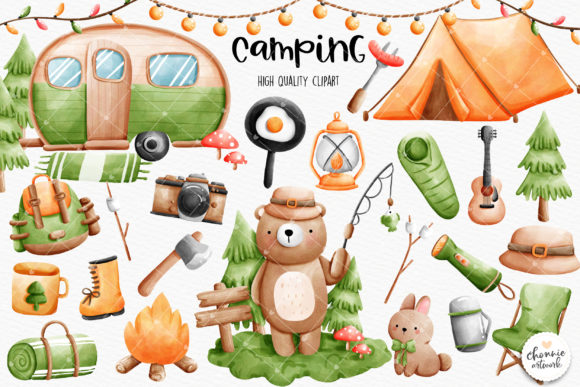
As a designer who spends more time staring at stitch simulations than actual camping sites, I am always on the lookout for assets that bridge the gap between digital artistry and tactile reality. When I first pulled up the Watercolor Camping Clipart, Camping Gear collection, my initial reaction was one of aesthetic appreciation. The soft, bleeding edges and organic shapes typical of watercolor Illustrations create a mood that is both nostalgic and inviting. However, appreciating a image on a screen is vastly different from translating it into a machine embroidery design that needs to survive a wash cycle on a toddler's sweatshirt or look professional on a boutique tote bag.
The Aesthetic Challenge: Translating Soft Edges to Stitch
The primary allure of this specific Watercolor Camping Clipart, Camping Gear set lies in its lack of hard boundaries. In the digital realm, this looks beautiful and airy. For us as embroiderers, this presents a unique challenge. Traditional embroidery thrives on defined lines, clear satin stitch borders, and solid fill stitch areas. Watercolor art, by definition, relies on gradients and transparency.
If you are planning to use these files as a direct digital embroidery file, you need to scrutinize how the digitizer has handled the color transitions. Are they using complex blending techniques with varying thread colors, or is it a flat representation? If the design relies too heavily on tiny, isolated stitches to mimic watercolor speckles, it might not hold up well on textured fabrics. For a clean, professional finished product, I recommend looking for versions of this clipart that have been specifically optimized with appropriate stitch density. If the original asset is just a raster image, be prepared to do some heavy lifting in your digitizing software to ensure the "soft" look doesn't turn into a messy, bird-nested reality on the fabric.
Real-World Application: The Boutique Tote Bag Scenario
Let's walk through a realistic scenario where I would deploy these assets. Imagine a local outdoor gear shop wants a line of reusable shopping bags for their summer sale. They want something that feels handmade but polished. This is where Watercolor Camping Clipart, Camping Gear shines.
I would select a sturdy canvas tote bag design as the base. Canvas provides enough stability to handle moderate stitch counts without excessive puckering. For this project, I wouldn't try to replicate every single watercolor splash. Instead, I would treat the clipart elements—perhaps a vintage lantern or a cluster of pine trees—as the focal point. By pairing the embroidery with a high-quality stabilizer, ideally a cut-away for durability, the soft shapes of the camping gear can pop against the neutral background of the bag.
The result is a handmade product that feels exclusive. Customers often perceive watercolor-style embroidery as higher value because it mimics hand-painted art. It suggests that the item is a personalized gift rather than mass-produced merchandise. For an Etsy seller or small shop owner, this distinction is crucial for branding. It elevates a simple bag into a piece of wearable (or carry-able) art.
Ideal Substrates and Fabric Considerations
Not all fabrics play nice with the intricate details found in camping-themed illustrations. Here is where practical judgment comes into play:
- Sweatshirts and Hoodies: This is arguably the best use case. The fleece interior provides natural cushioning, making the sweatshirt embroidery feel plush and premium. The slightly fuzzy texture of the exterior cotton blend helps soften the look of the stitches, enhancing the watercolor illusion.
- Baby Apparel: For baby embroidery, comfort is king. While the designs are cute for nursery themes, ensure the back of the stitching is covered. Watercolor effects often require many thread changes and dense underlay, which can be scratchy against sensitive skin. Always use a soft backing or cover stitch.
- Caps and Hats: Proceed with caution. Curved surfaces distort designs. The detailed corners of a tent or the fine lines of a fishing rod in the Watercolor Camping Clipart, Camping Gear set might collapse if the hoop size is too small or the fabric too curved. Stick to larger, simpler elements from the collection for headwear.
- Dark Fabrics: Watercolor implies lightness and transparency. On dark navy or black fabrics, you may need to lay down a white underbase or use lighter thread shades aggressively to maintain the visual integrity of the design. Without this, the "watercolor" effect disappears, leaving you with a standard, flat logo.
Commercial Viability and Brand Consistency
For those running a craft business, consistency is key. If you are selling custom apparel or embroidered patch collections, the Watercolor Camping Clipart, Camping Gear offers a cohesive theme. You can create a entire "Glamping" line featuring matching pillow covers, tea towels, and aprons.
However, before listing these as design assets or finished goods, you must verify the licensing terms. Just because a file is available for download does not automatically grant commercial rights for physical resale or digital redistribution. Check if the license allows for use in commercial embroidery projects. Some creators allow unlimited physical items but restrict the sale of the digitized file itself. Protecting your business means respecting these boundaries to avoid legal headaches down the road.
Technical Notes for the Digitizer and Maker
Before committing to a large production run, treat every new design as a prototype. Here is my checklist for integrating this specific style into your workflow:
- Test on Scrap First: Never skip this. Stitch the design on the exact same fabric weight and type you intend to use for the final product. Watch how the running stitch details behave.
- Check Contrast: View your test stitch-out in black and white (or take a photo and desaturate it). If the details vanish in grayscale, your thread color contrast is insufficient, and the watercolor effect will be lost on the viewer.
- Review Density: High stitch density can cause fabric distortion, especially on stretchy materials. If the design feels stiff or board-like after stitching, consider reducing the fill density or switching to a lighter weight stabilizer.
- Inspect Small Details: Zoom in on the tiniest elements, like the flame of a campfire or the laces on a boot. These are common failure points. If they don't stitch out cleanly, simplify them or remove them entirely.
- Mockup Verification: Create printable mockup images of your finished products using the stitched photos. This helps visualize how the Watercolor Camping Clipart, Camping Gear looks in a marketing context before you invest hours in production.
Final Verdict on Visual Appeal and Value
Incorporating Watercolor Camping Clipart, Camping Gear into your repertoire can significantly boost the perceived value of your items. It moves away from the rigid, corporate look of standard vector logos and embraces a warmer, more human aesthetic. This resonates deeply with buyers looking for holiday embroidery gifts, wedding favors, or unique home decor.
The success of this design style hinges on execution. It requires a thoughtful approach to thread selection, fabric choice, and stabilization. When done correctly, the result is a small shop product that stands out in a crowded marketplace. It tells a story of adventure and comfort, perfectly captured in thread. Whether you are decorating a kitchen towel for a housewarming or creating a signature line of patches for a hiking club, these illustrations offer a versatile foundation. Just remember: the magic isn't just in the download; it's in how you translate those watery pixels into durable, beautiful stitches that customers will love for years.