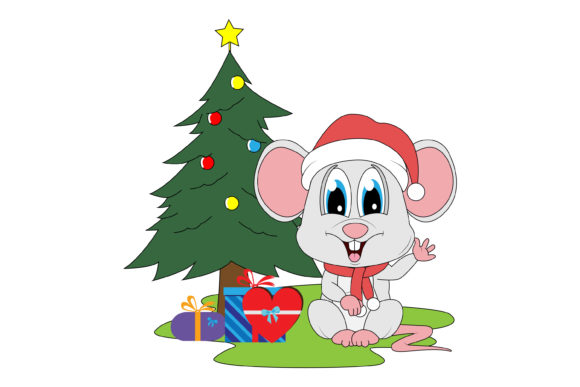
Cute Mouse Cartoon on Christmas: A Designer's Review
As a designer who spends more time staring at stitch simulations than actual holiday decorations, I approach every new machine embroidery design with a mix of excitement and skepticism. We've all been there: a file looks adorable on the screen, but once it hits the fabric, the details muddy, the density becomes a brick, or the charm simply evaporates under the needle. Today, I'm taking a close look at the Cute Mouse Cartoon on Christmas from the Illustrations category to see if it holds up for real-world projects, client work, and small shop merchandise.
My first impression of this design is that it leans heavily into whimsy without sacrificing structural integrity. The visual personality is undeniably festive, capturing that cozy, storybook mood we all want during the holidays. The layout feels balanced, with the mouse character positioned in a way that suggests movement and playfulness. For those of us creating handmade products, the "cute" factor is often the selling point, but as professionals, we need to know if the execution matches the concept. The line work appears clean, suggesting a thoughtful blend of satin stitch for outlines and fill stitch for the body, which is crucial for maintaining definition on smaller scales.
Real-World Application: The Holiday Tote Test
To truly evaluate the Cute Mouse Cartoon on Christmas, I imagined a specific scenario: a custom order for a local boutique needing a run of limited-edition holiday tote bags. These aren't just promotional items; they are meant to be gift-ready personalized gifts that customers will use repeatedly. In this context, the design needs to withstand the tension of canvas fabric and remain visible from a distance.
When visualizing this embroidery project, the mouse character shines as a focal point. Its proportions seem ideal for a standard 5x7 hoop, allowing enough breathing room so the design doesn't feel cramped. If you are an Etsy seller or run a craft business, you know that presentation is everything. This design offers strong visual appeal that translates well into printable mockups and digital previews, helping buyers visualize the finished product before purchasing. The theme naturally fits holiday embroidery collections, making it a versatile asset for seasonal drops.
However, the true test lies in the stitching clarity. In my mental simulation of stitching this onto a textured canvas tote, I noticed that the finer details around the mouse's face and accessories would require precise tension settings. If the stitch density is too high, you risk puckering the fabric, especially on a flexible item like a bag. Conversely, if the density is too low, the coverage might look sparse against a dark background. This is where checking the embroidery file specifications becomes non-negotiable.
Navigating Fabric Challenges and Hoop Constraints
While the Cute Mouse Cartoon on Christmas is charming, it demands respect regarding fabric choice. Not every surface is created equal. For sweatshirt embroidery or thick fleece, this design should perform beautifully, as the loft of the fabric can hide minor imperfections while the bold shapes pop. However, caution is advised when applying this to thin or stretchy fabrics. Without the right stabilizer, the weight of the fill stitches could cause the garment to warp over time.
I would also hesitate to place this on a structured cap without verifying the curvature compatibility. Curved surfaces distort designs, and if the mouse has intricate corners or tiny lettering elements, they might get lost or misaligned on a six-panel hat. Similarly, for baby embroidery on onesies, you must ensure the backing is soft and non-irritating, as babies have sensitive skin. The design's suitability for custom apparel depends entirely on your ability to adapt the hooping strategy to the garment's constraints.
Another critical consideration is color contrast. On dark fabrics, lighter thread colors used in the mouse's features need to be vibrant enough to stand out. If the design relies on subtle shading, it might disappear on a black tee. I always recommend running a test stitch-out on scrap fabric that matches your final material. This simple step saves hours of frustration and protects your reputation as a professional.
Commercial Viability and Brand Consistency
For commercial embroidery ventures, consistency is key. Does the Cute Mouse Cartoon on Christmas align with your brand's aesthetic? If your small shop product line focuses on minimalist modernism, this illustrative style might clash. However, for boutiques specializing in cozy, traditional, or family-oriented goods, it is a perfect fit. The design enhances brand consistency by offering a recognizable, high-quality motif that customers can associate with your holiday collection.
From a buyer engagement perspective, this type of character-driven art tends to perform well. It evokes emotion, which drives sales. Whether you are selling embroidered patches, pillow covers, or kitchen towels, the "aww" factor can be the difference between a browser and a buyer. Just remember to verify the licensing terms. Many digital embroidery files come with restrictions on the number of physical items you can sell. Never assume a design is free for unlimited commercial use; always read the fine print to protect your business.
Practical Notes for the Serious Stitcher
Before committing this design to a client's order, here is my checklist for ensuring success:
- Test First: Always stitch a sample on the exact fabric type you intend to use. Check for registration issues between color stops.
- Stabilizer Selection: Match your stabilizer to the fabric weight. Cut-away is often safer for garments that will be washed frequently, while tear-away works for stable home decor items like tea towels.
- Thread Contrast: Verify that your thread palette matches the preview. Sometimes digital colors translate differently in rayon or polyester threads.
- Density Check: Inspect the fill areas. If they look too solid, consider editing the density in your software to prevent stiffness.
- Hooping Strategy: Ensure your hoop size accommodates the entire design without cutting off edges. Floating the fabric might be necessary for awkward items like finished caps or plush toys.
- Licensing Verification: Confirm whether the license allows for resale of finished goods or if it is for personal use only.
In conclusion, the Cute Mouse Cartoon on Christmas is a delightful addition to any designer's library, provided it is treated with the technical care it deserves. It bridges the gap between playful illustration and functional design assets, offering a solid foundation for holiday gifts and boutique inventory. By respecting the limitations of your materials and machines, you can transform this digital file into a tangible product that brings joy to your customers and credibility to your brand. Happy stitching!